
Poet
Arthur Sze
25th U.S. Poet Laureate, Library of Congress; Professor Emeritus, IAIA
First Asian American U.S. Poet Laureate.
Santa Fe, New Mexico
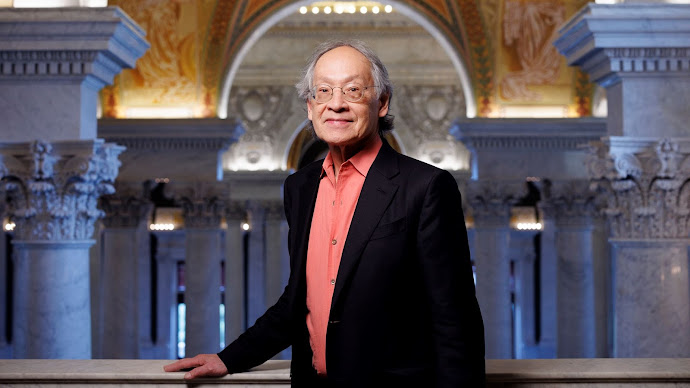
Quote from Arthur Sze
Translation makes the ancient contemporary, the foreign accessible, and the human experience universal.
About Arthur Sze
Attention, Curiosity, and Courage
Arthur Sze, named the 25th Poet Laureate of the United States, is an American poet, translator, and teacher whose life and work offer enduring inspiration, especially to young people discovering their own creative voices. His journey affirms a powerful message: trust daily observation, follow passion bravely, allow language to stay alive, and understand art as a way to connect across cultures, disciplines, and time.
Born in 1950 in New York City to Chinese immigrant parents, Sze grew up in a household like most Asian parents that valued mathematics and science. His father earned a master’s degree in chemical engineering from MIT, and Sze followed a similar path, enrolling there his freshman year. Yet during his first calculus class, he found himself bored and began writing in the back of his book. That evening, he returned to his dorm room and wrote his first poem and continued writing afterward. Writing became a discovery.
Although he would have become a capable scientist, Sze realized that competence alone was not enough; it was passion that would shape his life. Trusting that instinct, he left MIT and moved across the country to the University of California, Berkeley, where he graduated Phi Beta Kappa with a self‑designed major in poetry. For many young artists, his story is a reminder that paying attention to what truly excites you can lead to a meaningful and unexpected future.
Sze’s poetry grows out of everyday acts of observation -walking, noticing light, watching wind move across water but expands into a language that engages science, history, ecology, and spirituality. His poems show how ordinary moments can open into global understanding, inviting readers to slow down and see more clearly. For Sze, poetry is not decoration; it is a practice of attentiveness, a way to keep language responsive, awake, and alive in a complex world.
Translation played a central role in his work. Early in his career, Sze began translating ancient Chinese poetry, believing many existing translations felt stiff and lifeless. For him, translation is a profound form of learning: entering deeply into another culture while discovering how language can remain vivid across centuries. Through influential anthologies such as The Silk Dragon and The Silk Dragon II, he brought generations of Chinese poets to English‑language readers, demonstrating that words can bridge time, place, and tradition.
Equally important is Sze’s legacy as a teacher and mentor. For decades, he taught at the Institute of American Indian Arts in Santa Fe, encouraging students to trust perception, revise rigorously, and view writing as a lifelong process. His impact lives on through the many poets he helped shape, particularly Indigenous and multicultural writers whose voices continue to expand American literature.
Arthur Sze is the author of twelve poetry collections, including Sight Lines, winner of the National Book Award, and Compass Rose, a Pulitzer Prize finalist. His honors include the Ruth Lilly Poetry Prize, the Bollingen Prize, a Guggenheim Fellowship, and the Jackson Poetry Prize. In 2025, he became the first Asian American U.S. Poet Laureate and was reappointed for a second term in 2026.
Through poetry, translation, and teaching, Arthur Sze continues to inspire young readers and writers to pay attention, remain curious, and follow the passions that make language and life fully alive.
As Poet Laureate, his national project “Words Bridging Worlds” champions poetry in translation as a vital tool for global empathy.
Notably, Arthur Sze is the first Asian American US Poet Laureate.
In January 2026, Arthur Sze gave a poetry reading and lecture in Albuquerque, New Mexico.